#blog · September 26, 2024
Operating Construction Equipment on Public Roads
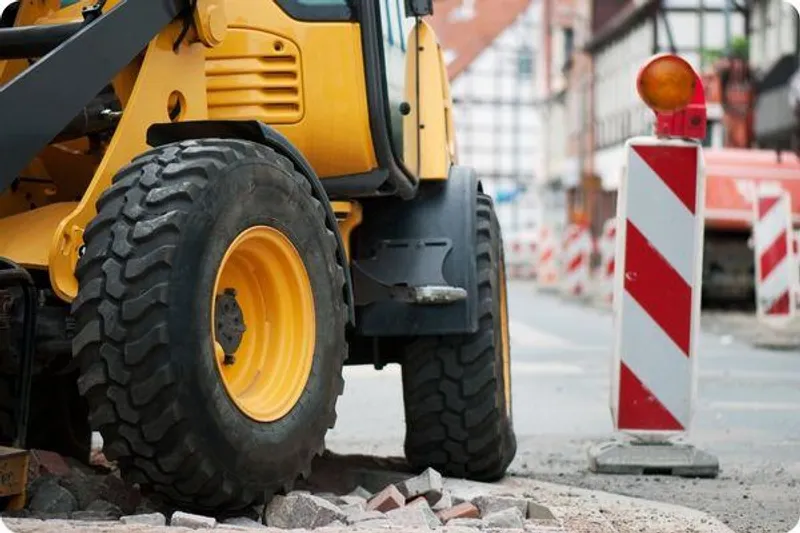
Operating construction equipment on public roads raises many questions. Whether excavators or loaders – there are strict regulations and rules that must be followed for use on public roads. This article provides a comprehensive overview of the key aspects to consider when operating construction equipment on public roads.
StVZO Rules for Work Machines on Public Roads
The use of construction equipment on public roads is governed by various regulations in the Road Traffic Licensing Regulation (StVZO) and the Road Traffic Act (StVO).
Road Traffic Licensing Regulation (StVZO)
The StVZO sets technical requirements for construction equipment on public roads. Important points include:
- Lighting: Functioning headlights and rear lights are mandatory.
- Marking: Speed signs must be displayed on the left, right, and rear.
- Warning devices: A yellow rotating light for vehicles with unusual dimensions, if required by authorities (§ 52 StVZO). An exemption permit is required under § 70 StVZO for permanent installation.
- Registration requirement: Self-propelled machines up to 20 km/h don't need a license plate, but require an owner's plate (StVZO § 64 b).
Operating with a pallet fork is not permitted – it must be transported separately.
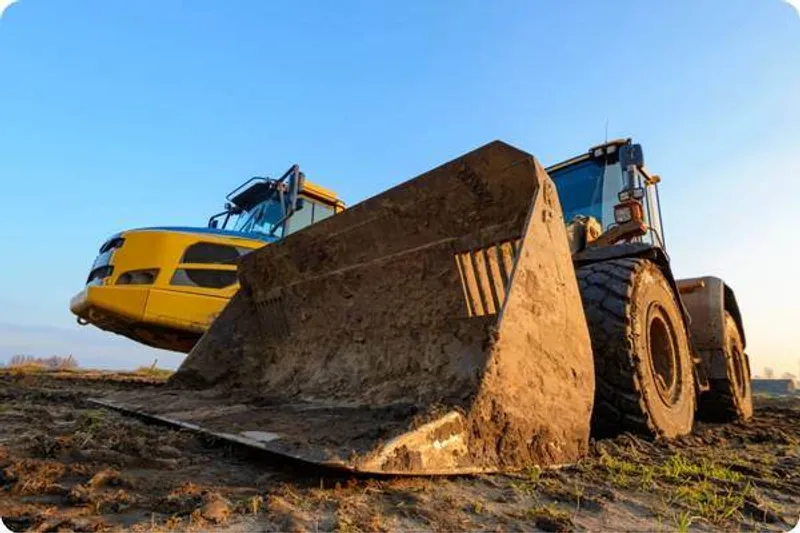
Wheel loaders and excavators in use at the job site
Road Traffic Act (StVO)
The StVO governs the conduct of construction equipment on public roads. Important points include:
- Speed: Maximum permitted speed must be observed.
- Traffic rules: Signs and regulations must be understood and followed.
- Yellow flashing light: Permitted to warn of work or accident sites and slow-moving vehicles (§ 38 Abs. 3 StVO). These warning lights enhance safety by alerting other road users to potential hazards.
These measures ensure that construction equipment can be operated safely and in compliance with regulations on public roads. Want to operate a wheel loader on public roads? Here's what you need to know.
Do You Need a Driver's License for Construction Equipment?
Yes, operating construction equipment on public roads generally requires a special driver's license. The type of license depends on the specific machine and its intended use. The minimum age for operating construction equipment on public roads is 18 years, and the operator must hold the appropriate driving license. In another article, we've answered the specific question of
whether you need a driver's license for an excavator.
Driver's License Requirements and Regulations for Construction Equipment
Driver's license class requirements depend on the machine's maximum speed:
- Up to 20 km/h: License class L or class 5
- Up to 25 km/h: For speeds exceeding 25 km/h, machine weight determines the requirement:
- Up to 3.5 tonnes: Class B
- 3.5 to 7.5 tonnes: Class C1 or class 3
- Over 7.5 tonnes: Class C or class 2
- Up to 40 km/h: License class T (only valid for agricultural and forestry purposes)
Note that drivers holding license class C must undergo regular eye examinations starting from age 50. In addition to the driver's license, the operator must be mentally and physically capable. The operator must be assigned by the employer to operate the machine and must participate in instruction on operation and maintenance. After instruction, the operator is required to confirm their competence to the employer.
Driver's License for Self-Propelled Work Machines
A distinction is made between self-propelled work machines up to 20 km/h and those over 20 km/h. A driver's license is always required if the machine travels faster than six kilometers per hour.
Self-Propelled Work Machines Up to 20 km/h
- Option 1: General operating permit, if necessary exemption permit and special permit for technical modifications must be carried.
- Option 2: Individual operating permit with corresponding expert report, if necessary exemption permit and special permit for technical modifications must be carried.
Self-Propelled Work Machines Over 20 km/h
- Operating permit
- Vehicle registration certificate (Registration certificate Part 1)
- Latest roadworthiness inspection certificate (TÜV)
- Emissions test certificate
- If applicable, exemption permit
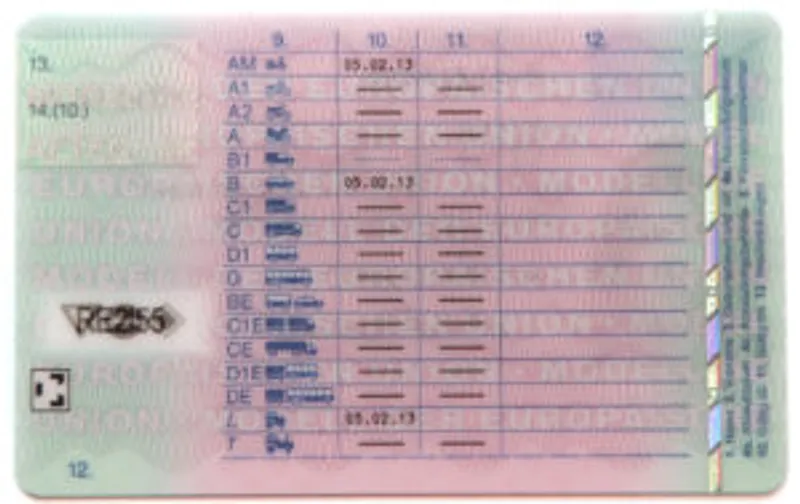
Driver's license class B and L permit operating self-propelled work machines over 20 km/h up to 3.5 tonnes
Rent construction equipment now
Safety Precautions When Operating Construction Equipment
Safety when handling construction equipment is of paramount importance. There are numerous regulations and recommendations designed to protect both the operator and other road users. Particularly in building and civil engineering, strict safety measures apply and specific machines are required to meet high standards.
What Protective Equipment is Required for Equipment Operators?
Construction equipment operators must wear certain protective gear to ensure their safety. This includes hard hats, safety vests, and safety glasses. This equipment is designed to prevent injuries and increase operator visibility. The following items must be included in a construction machine:
- First aid kit
- Warning triangle
- Warning vest
- Warning light (for vehicles over 3.5 tonnes)
- Wheel chock (for vehicles over 4 tonnes)
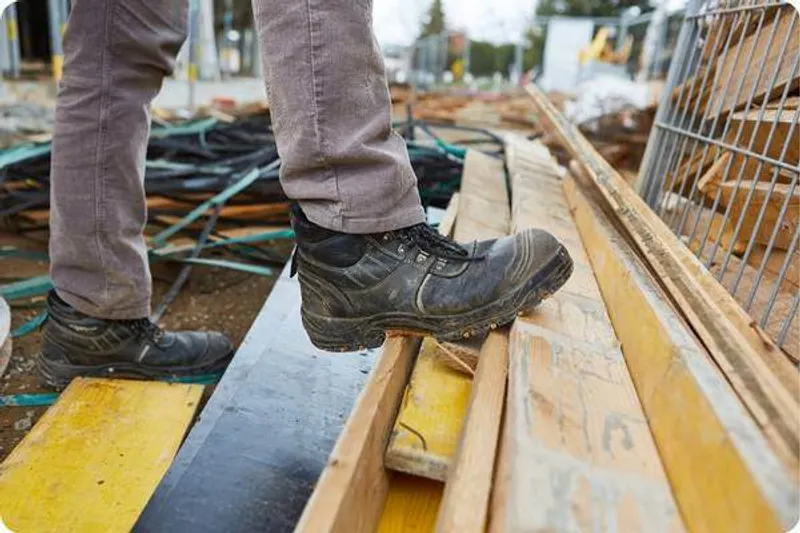
While not required on the machine: safety boots belong on every job site
What Must Be Considered Regarding Visibility of Construction Equipment?
The operator's field of vision must be clear of obstacles to prevent accidents. Mirrors and camera systems can help reduce blind spots. It is critical that the operator has a clear overview of their surroundings and can identify potential hazards early. For vehicles whose design doesn't provide operators with adequate visibility, a permit is required (§ 29 Abs. 3 StVO), which must be carried while operating. Such a permit can only be issued if the vehicle has a vehicle-specific exemption permit under § 70 StVZO.
Insurance Requirements for Construction Equipment on Public Roads
Construction equipment used on public roads is subject to special insurance requirements. These insurances cover damages that may be caused by the use of the equipment.
Insurance Requirements for Different Types of Construction Equipment
Insurance requirements for construction equipment on public roads depend on the machine's maximum speed:
- Over 20 km/h: Self-propelled work machines with license plates are mandatory through motor vehicle liability insurance.
- Under 20 km/h: No insurance requirement. This presents a risk, especially for private individuals, as private liability insurance typically doesn't automatically cover this risk.
Tips for Private Building Owners
As a private building owner, it's advisable to add damage risk to your liability insurance. For more information on insurance for construction equipment rented from klarx, see this article: Insurance for Building Owners
Additional Requirements for Construction Equipment on Public Roads
Beyond general regulations, there are additional requirements that may vary depending on location and intended use.
Regulations for Excessive Road Use
When construction equipment is used excessively on roads, such as for long transport distances or particularly heavy machines, additional permits may be required. If the construction equipment's dimensions, axle loads, or total weight exceed the legally permitted limits during operation, this constitutes "excessive road use" (§ 29 Abs. 3 StVO). In this case, a special permit is required for operation, and simultaneously a vehicle-specific exemption permit under § 70 StVZO. These permits must be obtained in advance from the relevant authorities.
Exemptions and Permits
In certain cases, exemptions and special permits are necessary to operate construction equipment on public roads. These permits are often time-limited and subject to specific conditions.
Conclusion
Operating construction equipment on public roads requires compliance with various legal and safety regulations. Thorough preparation and knowledge of the regulations are essential to avoid legal problems and safety risks. Would you like to rent construction equipment for your project? At klarx, you'll find the right machine and can get comprehensive advice. klarx offers increased transparency, flexible rental models, and a digitalization of construction equipment rental that makes your projects more efficient and sustainable.
Disclaimer:
Please note that our web offering is for informational purposes only. All information provided is without warranty as to accuracy and completeness. The content of our website – particularly the legal articles – is researched with great care. Nevertheless, the provider cannot assume liability for the accuracy, completeness, and timeliness of the information provided.
Image credits:
"Wheel loaders and excavators in use at the construction site" - Canva, "Driver's license class B and L permit operating self-propelled work machines over 20 km/h up to 3.5 tonnes" - Own illustration, "While not required on the machine: safety boots belong on every job site" - Canva
This page was automatically translated from German.