#blog · October 22, 2024
Telehandler or Wheel Loader - Which Machine for What Job?
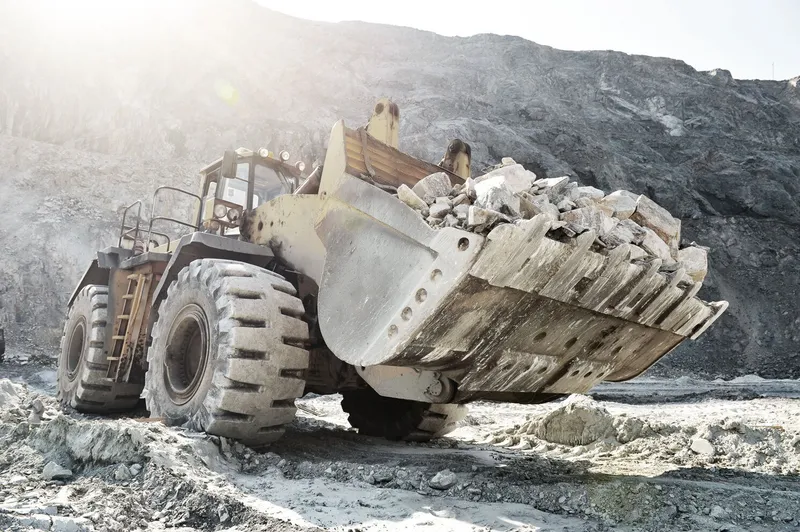
What are the advantages of each machine? Which machine is suitable for which purpose? In klarx's daily rental business, telehandlers and wheel loaders are classics. Both machines impress with their versatile applications and ease of operation. Nevertheless, the equipment has individual strengths and weaknesses. Occasionally, customers are unsure whether they need a telehandler or a wheel loader for their planned project.
The Telehandler – Characteristics and Uses
Telehandlers have many names, such as telecrane, telescope handler, telehandler boom lift, or rotating telehandler. All these terms describe the same working principle: a telescopic machine with an extendable boom to which attachments can be mounted. The telehandler is also called an equipment carrier because the movable boom can be fitted with a wide range of attachments.
Through flexible attachment of, for example, forks, winches, load hooks, and even a work basket to convert it into a work platform, the construction machine can be adapted to your needs individually. Unlike a forklift, where the load is moved vertically, the telehandler can move loads horizontally. This is the major advantage of telehandlers. With them, you can reach remote or awkward spots that are far from the machine. That's why telehandlers are popular for moving loads on construction sites to higher floors. Thanks to the extendable telescopic boom, the load can be placed several meters away from the machine into a building. Higher branches can also be easily reached with this machine using a work basket.
Reach Great Heights with a Secure Stance
Telehandlers are mainly used for lifting and loading work. Due to their enormous mobility, great stability, and especially the adjustable reach of the boom, telehandlers can perform work at heights of up to 26 meters. The excellent stability in use allows the transportation of a high payload. Additionally, some machines support stability with extendable outriggers. This makes the telehandler the ideal construction machine to flexibly lift heavy loads or reach difficult-to-access locations. The following video gives you an insight into operating a telehandler:
Flexible Thanks to Rear Axle Steering and Rotating Superstructure
Another advantage that makes the telehandler a "multi-talent" is its dynamic all-wheel drive. It enables the transport of loads on uneven terrain. Some models also feature rear axle steering, making them extremely maneuverable and usable in tight spaces. Machines with all-wheel drive usually also have all-terrain tires. If the vehicle is equipped with an orange rotating beacon, it can be used in road traffic at speeds of up to 20 km/h.
A special class of telehandlers are rotating telehandlers. These specialized machines feature a rotating superstructure and can move loads like an auto crane in a 360° radius around the machine. Combined with the wide range of attachments, the rotating telehandler offers maximum flexibility when it comes to moving loads. Buckets are also among the attachments. Telehandlers can be used for simple earthmoving work – a domain where the following machine is actually at home.
The Wheel Loader – The Advantages
The great strength of the wheel loader is earthmoving work. Therefore, it's mainly used on earthworks sites, quarries, recycling plants, and in forestry. It's all-terrain capable thanks to low-pressure tires with aggressive tread. This allows the wheel loader to easily handle soft ground and smooth out unevenness. The large tires with strong tread are advantageous for pushing work. The primary use is loading and transporting goods over short distances. However, reaching longer transport distances is no problem thanks to a powerful engine. If the vehicle is equipped with an orange rotating beacon, it can be used in road traffic at speeds of up to 20 km/h.
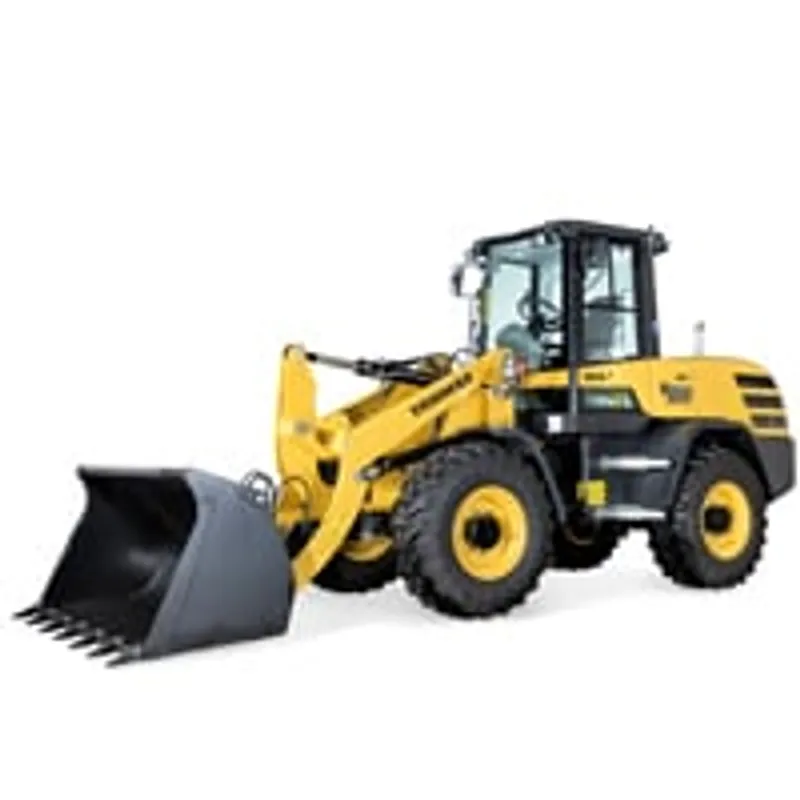
Strong in earthmoving - the wheel loader
Smaller Stacking Work Also Possible with the Wheel Loader
Wheel loaders can also be rented with a fork for lifting loads. However, the maximum lift height of wheel loaders is significantly lower than that of telehandlers. Additionally, the load can only be moved vertically with the wheel loader, not horizontally. Wheel loaders should therefore only be used for loading trailers or trucks, or for moving pallet goods on the job site from A to B. Thanks to all-terrain tires and all-wheel drive, the wheel loader can transport its load on uneven terrain just as reliably as a telehandler. There's also a broad range of attachments for wheel loaders that turn the machine into a sweeper, mower, auger, or grapple. This also shows the wheel loader to be a flexible machine. However, it's best suited for work near ground level or in areas under two meters. When you need to go higher, the telehandler comes into play.
Overview: Which Machine Do I Use for What?
So what can be said about the optimal applications for telehandlers and wheel loaders?
Telehandlers are best suited when you need to:
- Move loads higher than two meters.
- Move loads horizontally away from the machine.
- Use a flexible machine in tight spaces.
- Work with a rotating telehandler in a 360° radius around the machine.
Use a wheel loader when you...
- Need to mainly perform earthmoving work.
- Only want to lift loads at approximately two meters on its own axle.
- Need to push earth or other material together.
- Want to use a flexible machine in tight spaces.
Disclaimer:
We would like to point out that our web offering is solely for informational purposes and is not binding. All information provided is without warranty as to correctness and completeness. The content of our website – especially the legal articles – is researched with great care. Nevertheless, the provider cannot assume liability for the correctness, completeness, and up-to-dateness of the information provided.
Image credits:
"Strong in earthmoving - the wheel loader" © Yanmar
This page was automatically translated from German.