#blog · September 26, 2024
Cranes in Winter: How to Winterize Your Crane on the Job Site
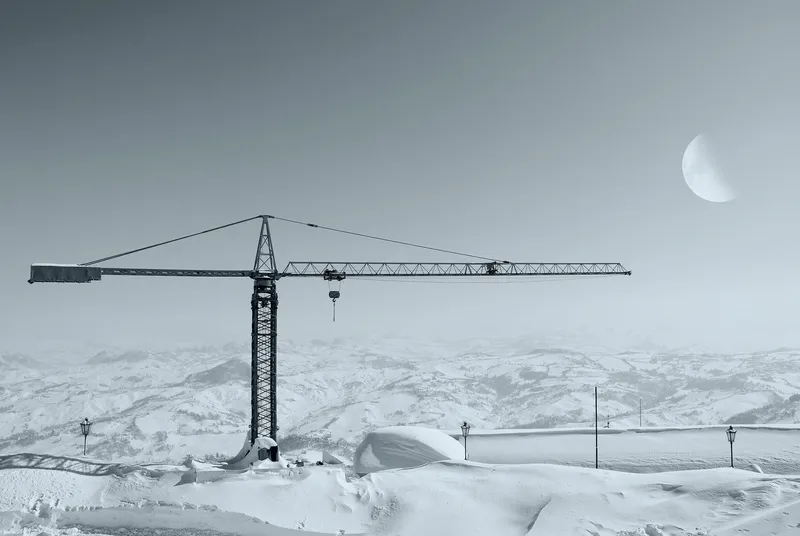
Snow, ice and cold: Here you'll find tips on how to winterize your crane.
Cranes in Winter
Once the first snow falls, work on the job site gradually slows down. Construction equipment is rarely or scarcely used and gets covered in frost and snow. Nevertheless, a few precautions need to be taken on the job site once winter is approaching. When operating cranes and temperatures drop toward freezing, there are essential things to keep in mind.
We'll explain what you can do to winterize your crane and when you should shut down your job site.
Cranes in Winter – What to Check Before Startup
Machinery on the job site can suffer damage in sub-zero temperatures and heavy snow, and it can also become a hazard. That's why you should be aware that snow can accumulate on the wire rope sheaves in winter. The rope can not only slip out but, in the worst case, even break – all workers need to keep this in mind.
1. Check the Brakes
Brakes on the crane can freeze overnight and no longer function properly. Make sure to check this and always conduct a safety inspection each morning!
2. Water Can Enter the Crane Gearbox
Be aware that gearboxes and other components heat up as soon as you operate the crane. If there's a thick layer of snow on the crane, it will melt. The result: Water that can damage motors, electrical connectors, or control cabinets.
3. Snow on the Boom
If there's a lot of snow on the boom, first attach a light load and let the trolley run across the entire boom – the load will help remove the snow from the boom. Repeat this as needed until the boom is mostly clear of snow.
Also worth reading: Winter Services: Navigate Snow and Ice with the Right Equipment
Cranes in Winter – Taking Equipment Out of Service
There are also a few things to keep in mind when shutting down the crane. Use these tips to avoid freezing or damage to your crane:
- Make sure you don't park the trolley and hook block at the end switches – this can cause problems when restarting because the trolley and hook block can freeze solid.
- Close the cabin window and keep the cabin heater running at a reduced level.
- Don't leave things like remote controls, batteries, etc. in the cabin – store them in a dry location.
Snow on Job Sites – Why It Becomes a Hazard
For earthwork and concrete work, the temperature threshold is minus five degrees Celsius. Beyond this point, working becomes difficult for both people and machines. Additional heat sources would also require extra budget. That's why: Snow on job sites must be properly cleared and de-iced to ensure work can safely proceed. Important elements on the job site can be buried under snow and become trip hazards. If there's risk of slipping, the job site is no longer safe to enter for workers or machines, so appropriate work gear – such as slip-resistant shoes – is essential. Wet snow and slush can also become dangerous: Falling icicles on cranes or snow cover can injure workers, and water can seep into motors and cause crane damage.
Disclaimer:
Please note that our website is provided for informational purposes only. All information offered is provided without warranty as to accuracy or completeness. The content of our website – especially legal articles – is researched with great care. However, the provider cannot accept any liability for the accuracy, completeness, and timeliness of the information provided.
This page was automatically translated from German.