#blog · September 26, 2024
Construction Industry 2023 – Trends and Challenges Ahead
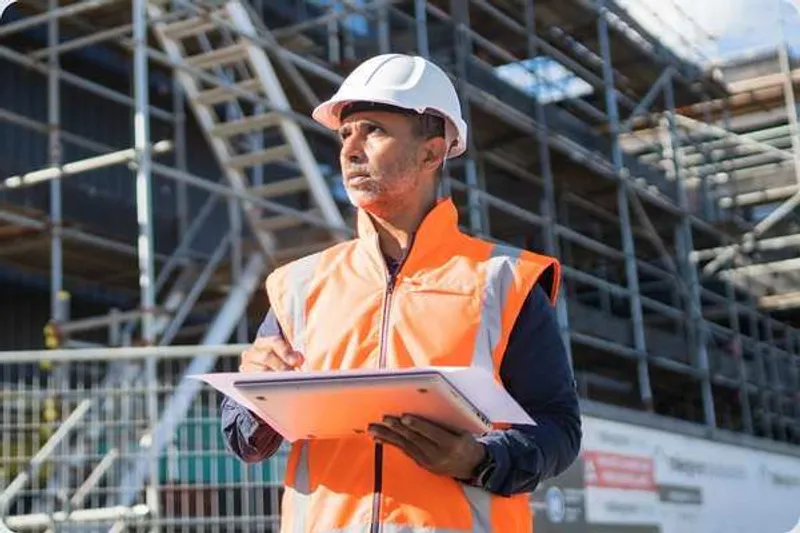
What's in store for the construction industry in 2023? What can we look forward to, and what challenges will we face? Here are the construction trends for 2023.
Construction Industry – Challenges Ahead in 2023
New year, new challenges. The construction industry isn't just undergoing significant change – it faces several hurdles: the conflict in Ukraine is driving enormous price increases for oil, gas, and material procurement. Supply chains for raw material transport are still strained by the aftereffects of COVID-19. The need for digitalization in construction continues to grow, and sustainability criteria ("Environmental, Social and Governance", or ESG for short) are pushing for more conscious action. One thing is clear: the construction industry needs to become greener in 2023. Let's look at the trends for 2023 and show how construction companies can act in line with current developments and overcome today's challenges.
Sustainable Construction for 2030 Climate Goals
It's good news that the construction industry is increasingly embracing sustainability and sustainable building practices. However, there's still plenty of work to do to meet 2030 climate targets. Construction processes need rethinking, material procurement must be optimized, and supply chains need to become emission-free. The solar industry is set to boom – Germany achieved around 60 GW of PV systems in 2021. Habeck's Easter Package requires Germany to expand PV capacity to 215 GW by 2030. This means creating space and significantly shortening approval processes. It requires collaboration from all stakeholders to implement these measures profitably.
Sustainability and Transparent Processes at klarx
For the construction equipment in our logistics centers, we not only manage our own transports – the machines are also equipped with intelligent telematics units that enable a transparent rental process: information about precise machine usage or consumption of our climate-neutral diesel is recorded and analyzed for sustainable and cost-saving deployment at the job site. Reliable delivery can be tracked using GPS monitoring to ensure planned construction projects stay on schedule.
Read more: klarx and Sustainability
Greater Sustainability in Construction Thanks to ESG Criteria
By 2050, Europe should be climate-neutral. The construction industry has significant ground to make up. That's why 2022 – and 2023 – puts even more focus on ESG criteria, which can be integrated into all construction phases. ESG stands for Environmental, Social and Governance and encompasses sustainability-related provisions designed to guide greater environmental awareness.
The ESG Criteria
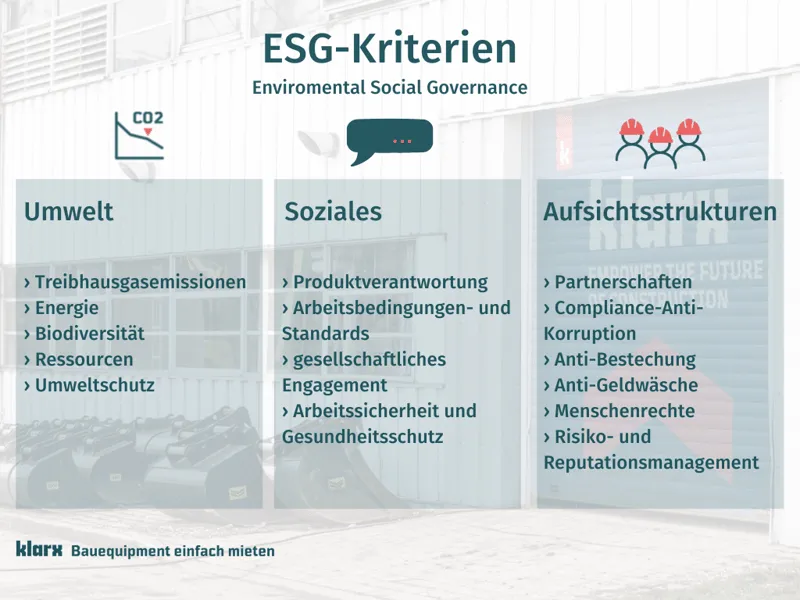
The three pillars of ESG criteria
But what do these criteria mean for the construction industry? Non-compliance has consequences not just for the environment, but for the company itself: more and more investors are paying attention to companies' sustainability strategies – failing to comply could mean losing future investor interest and the financial support that comes with it. Plus, companies investing in "greener building" can ultimately generate more revenue: renting construction equipment instead of buying, using natural raw materials or recyclable materials – these are just a few ways to contribute.
Implementing Sustainability in Your Company – Here's How!
For the reasons mentioned above, it's important to take sustainability seriously and give it proper attention. With simple measures and an eye toward ESG, you can make your company more sustainable today:
- Offset CO2 emissions through a partner (e.g., climate partner)
- Sustainable employer branding (e.g., GOTS-certified clothing)
- Resource-conscious working (either ventilate or heat, separate waste, …)
- Digital over analog structures (goodbye paperwork!)
- Invest in climate projects
- Sustainable business practices at the job site (starting with digital planning through efficient operation of construction equipment on-site)
Enormous Price Increases and Supply Shortages
The outbreak of war in Ukraine in early 2022 has brought significant changes to the construction industry. Rising inflation rates across the board are driving up costs for material procurement and logistics due to skyrocketing oil and gas prices. Global economic uncertainty is also affecting financial markets, making capital financing for construction projects significantly harder. Building permits for housing dropped 9.4% in August 2022 compared to the same month the year before (source), with many projects being canceled or postponed.
The forecasts for 2023 currently look concerning. On December 6, 2022, the Central Association of the German Construction Industry (ZDB) announced its assessment: revenue in the main construction sector is expected to decline by 7%.
COVID-19 in Construction – Familiar Challenges
In 2023, we'll continue to see shortages in the delivery of raw materials and building supplies brought on by the COVID-19 crisis in early 2020. The first lockdown and short-time work arrangements continue to have ripple effects. Combined with the consequences of the Ukraine conflict mentioned earlier, supply shortages and material availability challenges will persist. There's no relief in sight at the moment.
Software Solutions in Construction
2023 is (once again) the year of accelerating digitalization in the construction industry. Digital solutions save enormous amounts of time and support sustainability efforts. Transparent and efficient processes mean shorter communication loops, resources can be deployed elsewhere, and the construction process ultimately moves forward faster.
More and more companies are recognizing this advantage and reorganizing their own construction management: digital procurement of rental equipment, documentation, and billing pave the way to the paperless job site. Phone communication is increasingly being replaced by apps and text messaging. Software solutions deliver one thing above all: cost-effective, faster, and simpler handling of all construction processes.
Digital Rental Experience with klarx
From inquiry through delivery to release and pickup: our digital solutions guarantee the perfect rental experience and the easiest way to rent construction equipment. Our app and klarxMANAGER save you enormous amounts of time and enable simple communication – from inquiry to pickup. Start your digital rental experience with klarx today and rent construction equipment.
Go Digital with klarx
To sum up: the overall economic situation has deteriorated since early 2022. The energy crisis, inflation, and associated supply shortages and price hikes are presenting the construction industry with new challenges. On the other hand, digitalization progress and sustainability measures are moving to the forefront. Companies that don't keep up with sustainability, digitalization, or AI in construction will definitely lose out.
Leading the way are software solutions like klarxMANAGER, which we presented at bauma 2022. With klarxMANAGER, you can process construction equipment rentals in just seconds – with full transparency and easy operation.
If you want reliable equipment rental, time-saving processes, and digital solutions, klarx is your best choice. Use our software solution and book directly from the job site, benefit from digital handover protocols and logistics notifications. If you'd like to learn more,
This page was automatically translated from German.