#blog · September 26, 2024
Procuring Construction Equipment: Should I buy, lease, or rent?
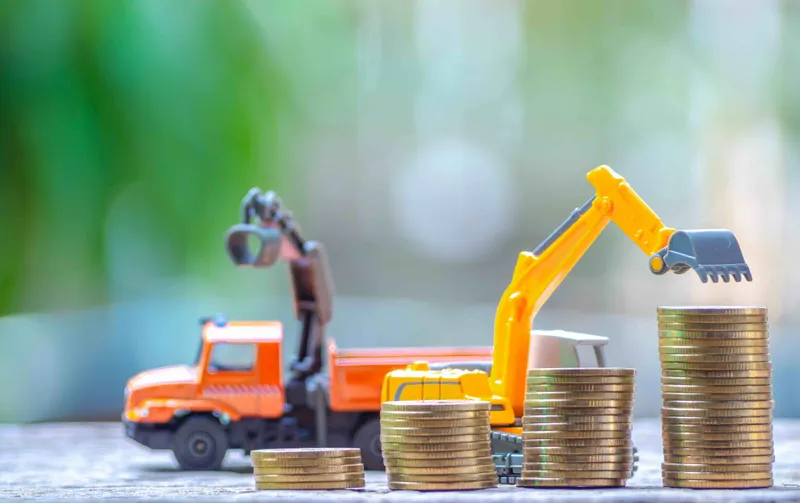
If you're tasked with procuring construction equipment for your building projects, you face an important decision: should you buy, rent, or lease? And when should equipment be rented instead of bought? Here you'll learn the pros and cons of renting construction equipment.
Buy, lease, or rent construction equipment?
Without the right construction equipment, staying on schedule for a project quickly becomes risky. That's why most contractors maintain a fleet of machines like excavators or wheel loaders that can be rented anytime. Companies want to deliver reliable work even during growth periods or when executing unusual jobs.
How can your equipment fleet help increase your company's reliability and cost-effectiveness?
Benefits of renting construction equipment
The trend of renting equipment has now taken hold across many industries. The construction sector is also showing strong interest in this concept. Beyond financial savings and increased flexibility, the saved resources for equipment maintenance also speak in favor of renting.
Renting construction equipment comes with many advantages – here are the most important ones:
- guaranteed availability of construction equipment
- extensive selection
- find equipment nationwide for jobs – including specialized machinery
- costs only for days in use
- no maintenance or repair expenses – full service from the rental provider
- usually 100% tax deduction of rental costs
- simplified budget planning, since costs typically only arise once a job is assigned
- short-term equipment failures have no impact on customers
- spare parts can easily be rented and returned free of charge when not in use
- rental equipment is always state-of-the-art
- rental costs often qualify for tax benefits
- no loss or theft risk, as rented equipment is fully insured
Benefits of buying construction equipment
What advantages does purchasing construction equipment offer? Owning your own small fleet can certainly make sense and offers these benefits:
- your own equipment that your employees are familiar with
- guaranteed availability of construction equipment
- tax advantages (depreciation, investment allowances)
Benefits of leasing construction equipment
The third option alongside renting or buying construction equipment is leasing, which offers these advantages:
- own equipment for a certain period
- guaranteed availability
- spreading the investment amount over several months
- usually 100% tax deduction of lease payments
When does buying a machine make sense?
For frequently used equipment like mini excavators, wheel loaders, or plate compactors, a purchase will likely pay off in the long run. These are almost always needed, and your employees have equipment they know and can rely on. However, for demand spikes or special applications, you often need additional machines. In such cases, your company must decide whether buying more equipment makes economic sense.
What should you consider when deciding to buy construction equipment?
When you buy a machine, you're also responsible for repairs and maintenance and must cover those costs. If it's really just demand spikes or seasonal use like winter services, buying isn't economically viable due to high upfront investment costs. Leasing construction equipment becomes the more attractive option.
When does leasing construction equipment make sense?
You have a new machine for the lease period, which returns to the lessor when the contract ends. This allows you to always access relatively current equipment that meets today's technical standards. Longer lease terms also spread investments for a new wheel loader or mini excavator over time, avoiding a large upfront burden on your company. This protects your equity and looks good on the balance sheet. Over the lease term, companies can deduct 100% of lease payments as expenses, which is more attractive than a purchase that must be depreciated over several years. However, these lease terms typically run at least 12 months, tying your company to a machine for relatively long periods.
But: Leasing doesn't really offer a truly flexible, job-specific solution for construction equipment.
Gain flexibility by renting construction equipment
If you want to flexibly adjust your fleet and manage equipment logistics transparently online, digital rental of construction equipment is the right path. Renting not only lets you find the right equipment for your specific job site, it also allows your company to work across regions and rent equipment locally. This saves you the cost of transporting your own machines. Of course, you always get current equipment in perfect technical condition. As a renter, you don't worry about maintenance and repairs – you get comprehensive service from the provider. The biggest savings come from only paying rental and insurance costs for the days you actually use the equipment.
Renting construction equipment – the best solution
Ownership means responsibility. If you want to own a construction machine, you must also cover repair and maintenance costs plus spare parts expenses. The rule is: if machines or vehicles are only needed temporarily (such as seasonal use), buying isn't a smart option due to relatively high acquisition costs – you'll definitely do better with flexible, on-demand rental of needed equipment. The same applies if you're a contractor who occasionally needs expensive specialized equipment for a job or frequently works on different job sites.
Disclaimer:
We point out that our web offering serves only for non-binding informational purposes. All information provided comes without warranty as to correctness or completeness. The content of our website – especially legal articles – is researched with great care. Nevertheless, the provider cannot accept liability for the accuracy, completeness, and timeliness of the information provided.
This page was automatically translated from German.